
Congratulations, you’re engaged! Once the initial rush of showing off your ring and sharing the news subsides, reality sets in: you have a major, complicated event to coordinate.
Naturally, your first thought might be, "We need to hire a wedding planner." But before you open search engines and start emailing local professionals, it is crucial to understand that "wedding planner" is not a single, uniform job description.
Hiring the wrong category of professional is one of the most common mistakes couples make, often leading to wasted budget or duplicate effort. To set you off on the right foot, here is your definitive guide to the different types of wedding planners, their responsibilities, and how to know which one matches your needs.
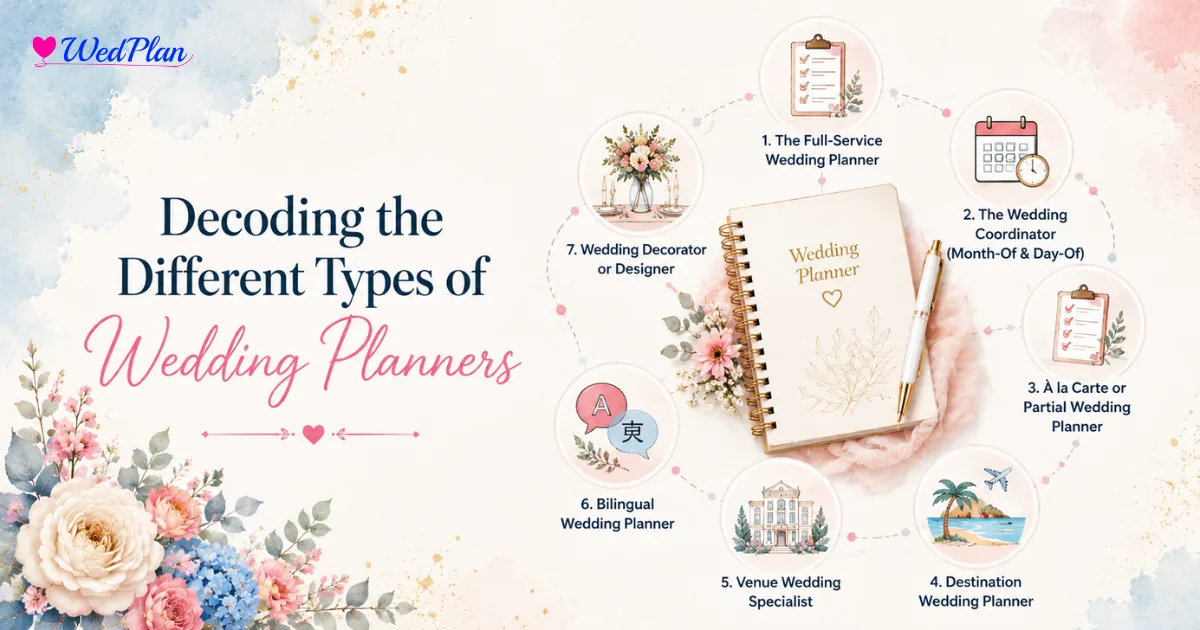
1. The Full-Service Wedding Planner
A full-service wedding planner helps you plan everything from start to finish for the wedding day or for a weekend of events. The full wedding-planning services of this pro are likely what you think of when you hear "wedding planner."
From start to finish, a full-service planner will take care of everything and is the best option for couples short on time, inspiration, or motivation (and those that have a higher budget set aside for professional coordination). Whatever the case, hiring a full-time planner can help alleviate the pressure you may be feeling about the wedding day.
What they help you with:
- Create, track, and manage your overall wedding budget.
- Recommend, vet, negotiate, and hire your wedding vendors.
- Help with event design, aesthetic style, and floor plans.
- Facilitate venue tours and site walks.
- Manage guest lists, invitations, RSVPs, day-of timelines, and on-site vendor management.
2. The Wedding Coordinator (Month-Of & Day-Of)
Different from a wedding planner, who takes care of the entire event from inception, a wedding coordinator hones in on the logistics of the day itself, ensuring all runs smoothly. Wedding coordinator services generally come in two forms:
Month-Of Coordinator
A month-of wedding coordinator will step in much closer to your wedding day. Coordinating your wedding effectively and professionally requires experience, skill, time, and some advanced planning, so month-of coordination usually starts four to eight weeks from your wedding date.
What they help you with: Reviewing final vendor contracts, finalizing day-of details (last-minute deliveries, payments, tipping), conducting the final walk-through, signing off on your wedding-day timeline, organizing guest counts and floor plans, and coordinating your wedding rehearsal and day-of itinerary.
Day-Of Coordinator
A day-of coordinator handles truly last-minute details and might not step in until the week before your wedding date. Their job is to ensure the choreography of your day is followed, keeping things moving along as they should (because someone has to know when to peel you away from dinner to cut the cake).
Note: Many planning companies offer "day-of coordinators" that are actually month-of coordinators, so read contracts carefully. 36% of couples who hired a wedding planner booked a day-of pro, making them the most popular of the different types of wedding planners.
What they help you with: Assisting with heavy lifting required on the day itself, ensuring vendors arrive on schedule, and maintaining the timeline so you can soak up every minute.
3. À la Carte or Partial Wedding Planner
Part-time or à la carte wedding planners offer all of the expertise of a full-time planner, but only for the aspects of your choice, so you can customize your package to suit your specific needs.
If you've got most of the wedding planning under control, but could use a helping hand for select things, a part-time planner is perfect. They are also a more budget-friendly way to get professional help.
What they help you with:
- Providing curated vendor recommendations (you contact and manage them, but get trusted referrals).
- Design support, mood boards, and on-site aesthetic execution.
- Coordinating only the most important parts of your wedding (lacks the bird's-eye view, but helps where you need it most).
4. Destination Wedding Planner
A destination wedding planner is essentially a full-service planner with expertise in planning events at far-flung wedding sites.
Getting married on a pristine shoreline or at a centuries-old manor is a beautiful vision, but managing travel itineraries, customs, language barriers, and global logistics for a weekend of events is not. Destination planners make the entire journey as seamless as the ceremony.
What they help you with:
- Scout and secure the perfect destination venue and local vendors.
- Support guests with travel coordination and accommodations.
- Design detailed multi-day trip itineraries.
- Navigate local cultural differences, marriage laws, and permits.
5. Venue Wedding Specialist
The difference between a wedding planner and a venue wedding specialist is that the specialist is hired by the venue itself. Their focus is solely on weddings taking place on their property.
A wedding specialist assists in planning the logistical elements of your day through the lens of the venue. They will have recommendations for vendors familiar with the space and can run you through venue inclusions, layout rules, and in-house catering schedules.
6. Bilingual Wedding Planner
Bilingual wedding planners speak two or more languages and can be helpful in a variety of situations. Perhaps the couple speaks English, but would like to involve a set of parents who communicate better in a different native language. Or perhaps you're getting married in a destination where neither of you is familiar with the native tongue.
Bilingual planners come in all of the types listed above; they just have the additional benefit of being able to communicate across languages to prevent misunderstandings with vendors or family members.
7. Wedding Decorator or Designer
This type of professional is very different from a planner, which may come as a surprise. While wedding planners handle logistics, timelines, and other vendors, wedding decorators or designers take care of your floor plan and the overall venue design and aesthetic.
These experts are a great option if you have the logistics of your wedding fully sorted, but want help turning your Pinterest collections and mood boards into reality.