
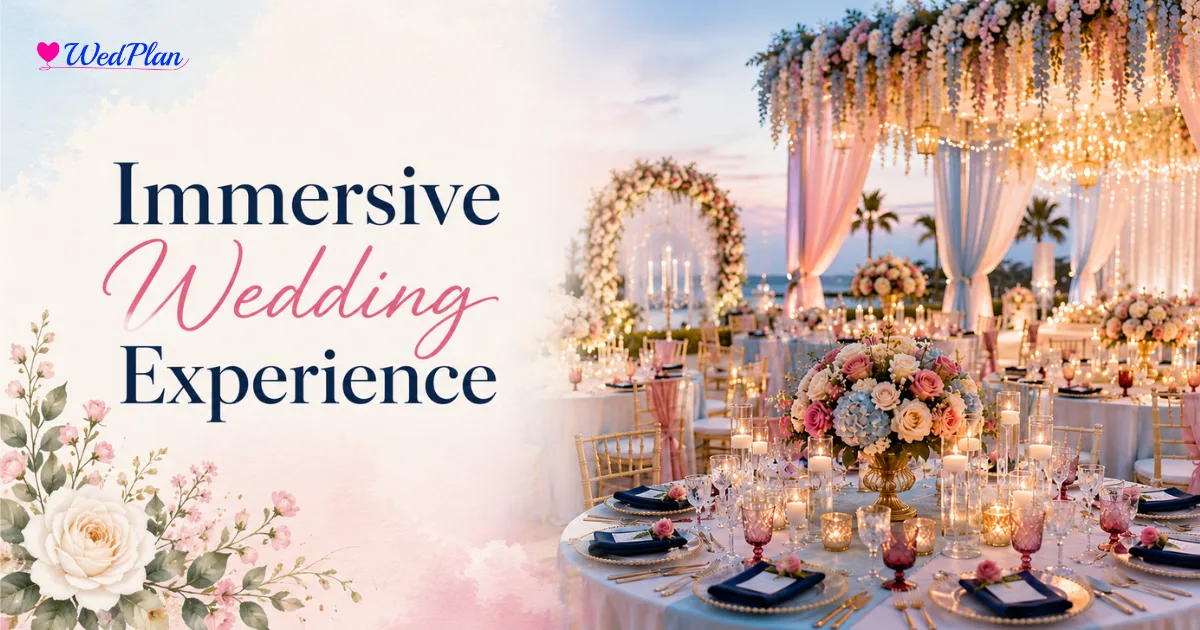
A beautiful wedding is not automatically an immersive wedding. Beauty is what guests see when they walk in. Immersion is what they feel from the first welcome drink to the final goodbye. It is the difference between guests saying, "The decor was nice," and guests saying, "I felt like I was part of something."
I have seen weddings with modest budgets feel unforgettable because the flow was warm, the hospitality was thoughtful, and every event had a clear emotional rhythm. I have also seen expensive weddings feel strangely flat because everything looked grand, but nothing connected.
1. Start With the Guest Journey
Before you choose another centerpiece or backdrop, walk through the wedding as a guest. Where do they arrive? Who greets them? Is the signage clear? Is there a place to sit? Do they know what happens next?
Immersion begins when guests feel guided without feeling managed. A host at the entrance, a clear welcome board, event-wise itinerary cards, and a simple WhatsApp update can remove confusion before it begins.
- Plan the first 10 minutes of arrival carefully.
- Make the check-in or welcome desk warm, not bureaucratic.
- Give elders seating and shade before they have to ask.
- Use signs where guests naturally pause: entrance, lift lobby, lawn turn, dining area.
2. Give the Wedding an Emotional Thread
A wedding should not feel like separate functions stitched together in a hurry. The best celebrations have a thread. It could be family warmth, old-world romance, playful modern energy, a travel story, a cultural memory, or the couple's shared love for music.
Once you know the emotional thread, every decision becomes easier. The invitation, welcome note, entry music, food stations, speeches, and farewell can all speak the same language.
3. Design for All Five Senses
Most couples plan for the camera. Experienced planners plan for the body. Guests remember the scent near the entrance, the way the music changed during sundown, the texture of a handwritten note, the taste of the first bite, and whether the room felt too hot or too loud.
- Sight: keep one strong visual moment instead of ten competing backdrops.
- Sound: use music transitions to shift mood from welcome to ritual to celebration.
- Scent: fresh flowers, mild attar, incense, or venue-specific aroma should be subtle.
- Taste: let food tell a story through regional stations or family favorites.
- Touch: comfortable seating, soft napkins, weather-friendly fabrics, and easy pathways matter.
Make the guest experience easier to manage
WedPlan helps you organize guests, event-wise RSVPs, WhatsApp invites, and wedding website details in one place.
Sign up free4. Hospitality Is the Real Luxury
I have learned this the hard way: guests forgive simple decor faster than they forgive poor hospitality. If the valet is slow, the food queue is confusing, the washrooms are hard to find, or nobody knows where grandparents should sit, the wedding loses its magic.
Luxury is not only chandeliers and imported flowers. Luxury is a guest being noticed before they are uncomfortable.
- Keep water and light snacks available before the ceremony begins.
- Assign family-side hosts who know the relatives personally.
- Have a quiet seating zone for elders and children.
- Prepare a small recovery kit: safety pins, tissues, pain relief, mints, and phone chargers.
5. Create Moments Guests Can Join
The most immersive weddings do not make guests stand around as spectators. They invite people into the story. This does not mean every function needs a performance. It means guests should have small ways to participate.
A memory table, a blessing wall, a family recipe station, a "song request for the couple" card, a mehendi corner with the couple's symbols, or a short dance cue for friends can make guests feel involved.
6. Protect the Flow of the Evening
Flow is invisible when it works and painful when it fails. Long dead gaps, unclear announcements, late food, endless speeches, and abrupt music changes can pull guests out of the experience.
Build the event like a good story. Welcome, settle, reveal, celebrate, feed, lift the energy, then close with warmth. Even a big Indian wedding with multiple rituals can feel smooth when someone is protecting the transitions.
- Keep ceremony-to-dinner gaps planned with tea, snacks, music, or photo moments.
- Give the emcee a clean running order, not a vague instruction.
- Do not schedule emotional speeches when guests are hungry.
- Let music rise gradually instead of jumping from soft ritual to nightclub volume.
7. Personal Details Beat Expensive Details
Personal touches are the details people carry home. A note from the couple, a menu inspired by both families, a playlist from their college days, a small tribute to grandparents, or table names based on meaningful places can make the wedding feel intimate even with 500 guests.
Do not over-explain these details with long boards. Let them be discovered. A little intimacy is more powerful than a large paragraph.
8. Use Technology Quietly
Technology should support the guest experience, not steal attention from it. A wedding website, event-wise RSVP, digital itinerary, map links, and WhatsApp updates can make guests feel cared for before they reach the venue.
The trick is to use tech for clarity, not noise. Guests should receive the right information at the right time: location, dress code, timing, parking, RSVP, room details, and any last-minute changes.
Mistakes That Break Immersion
- Choosing decor before understanding guest movement.
- Keeping the same music energy for every part of the event.
- Overloading the program with performances and speeches.
- Ignoring food timing because the photo schedule is running late.
- Making guests ask basic questions that should already be answered.
Final Word
My strongest advice is simple: do not plan only the wedding your guests will look at. Plan the wedding they will move through, taste, hear, understand, and emotionally remember.
Immersion is not about spending endlessly. It is about caring deeply. When guests feel welcomed, guided, fed, included, and emotionally connected, the wedding becomes more than an event. It becomes a memory with a heartbeat.